Ideas with notes Wedding rituals
Muslim Wedding Rituals in India, From Nikah to Walima
Muslim wedding rituals in India in order: baraat, nikah with the qazi, mehr, ijab and qubool, nikahnama, rukhsati and walima, plus what to arrange.
- Ideas
- 6
- On every card
- Palette, occasion, effort, notes
- Checked
- 23 Nov

Muslim wedding rituals in India centre on one short, serious moment: the nikah, a marriage contract made with clear consent from both sides in front of witnesses and the qazi. Everything around it, the baraat, the sehra, the dates handed out, the farewell and the walima feast, comes from family and regional custom and changes a lot between Hyderabad, Lucknow, Kerala, Bengal and Kashmir.
The turmeric day (manjha or ubtan) and the mehndi come before and are handled by our sister site. Here we explain the nikah day and what follows it, in order, who does what, how long each part takes and what the family needs to arrange. Sunni, Shia, Bohra and other communities differ on some steps, so check with your family elders and the qazi who will conduct the nikah.
Compare with other customs on our wedding rituals page, find card ideas on the Muslim wedding card page, and see wedding gift ideas for nikah and walima gifts.
All 6 ideas at a glance
01Baraat and Nikah: The Heart of Muslim Wedding Rituals
The groom arrives with his family, often wearing a sehra of flowers over his face, and is welcomed with rose water, garlands and a sweet drink. The nikah follows in a quiet part of the venue.
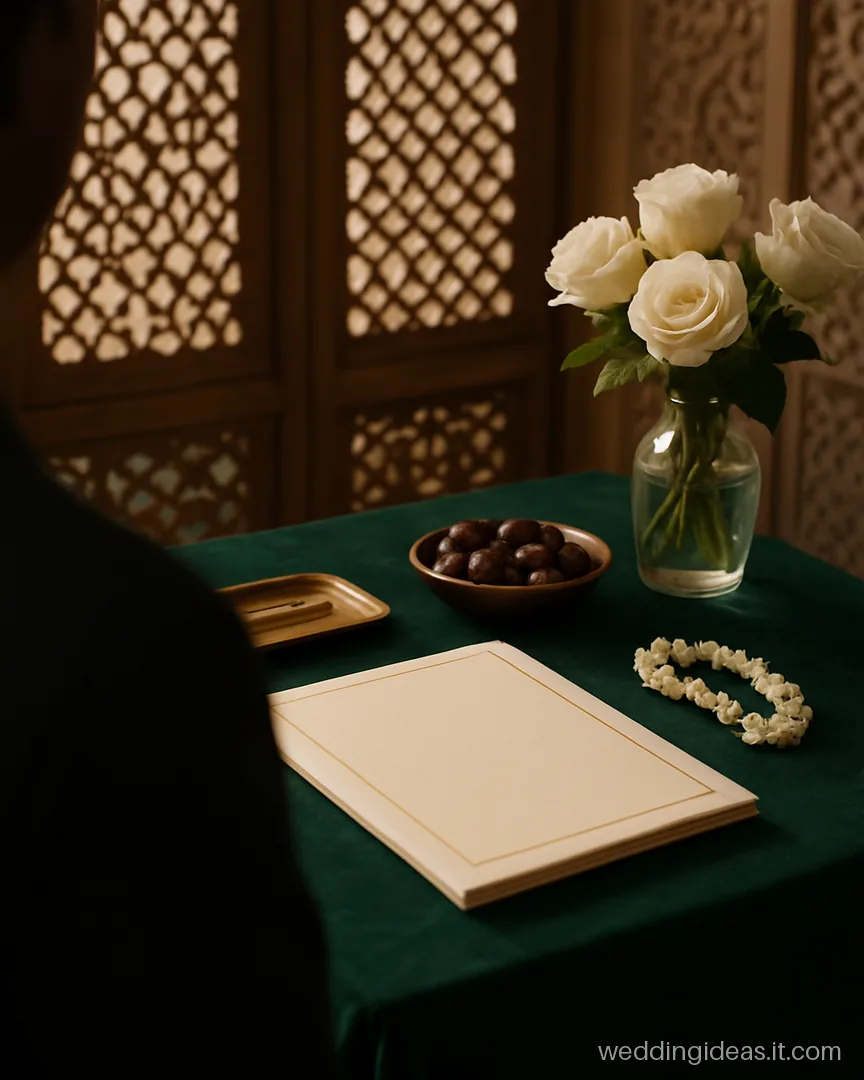 No. 01
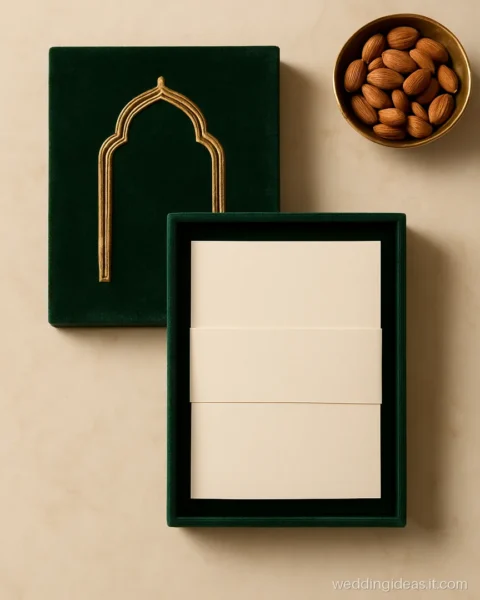
Nikah signing table
Ivory, emerald green, gold
- ForNikah
- Effort1 hour setup
The nikahnama is the written marriage contract. The bride, the groom, two witnesses from each side and the qazi sign it, and many families keep it in a decorated folder afterwards.
4 planner notes
- Collect ID copies of the couple and witnesses a week before.
- Keep two good pens; one always runs dry at the worst moment.
- Set the table in a quiet corner, away from the music.
- Ask the qazi which papers he brings and which you must bring.
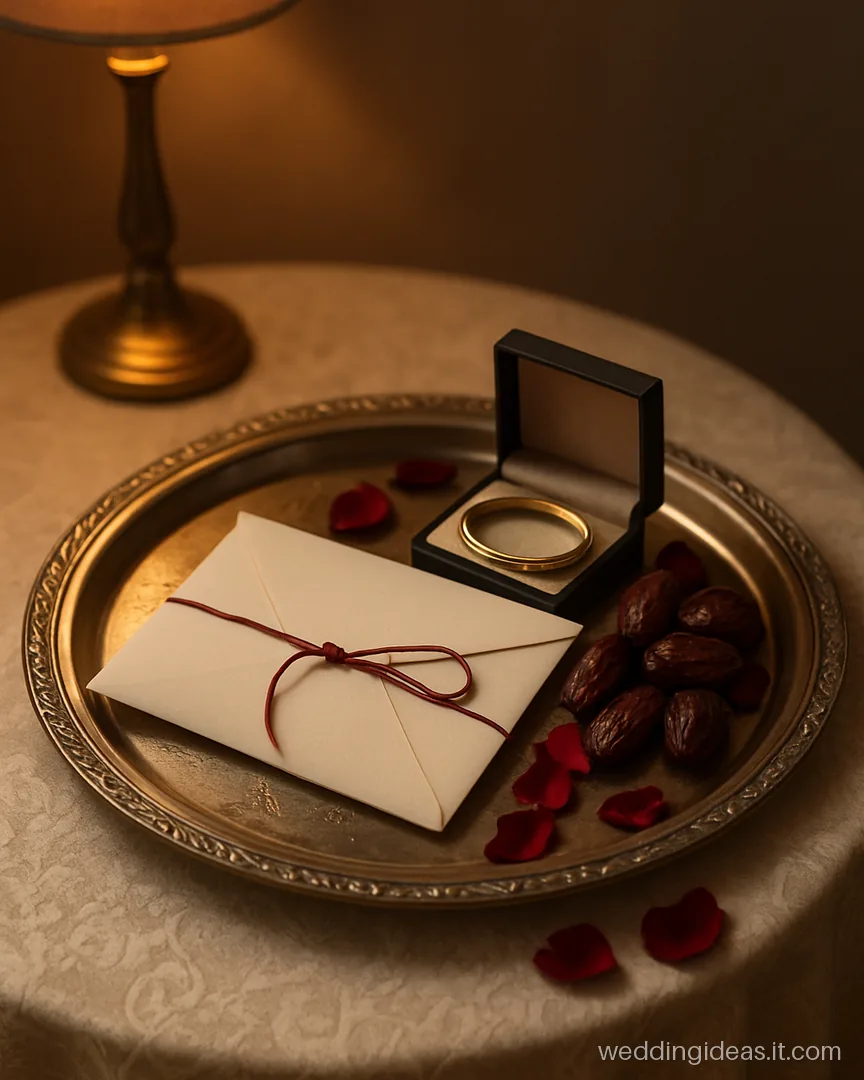 No. 02
Mehr gift tray
Silver, dates brown, rose red
- ForNikah
- EffortAgree in advance
Mehr is the gift the groom must give or promise to the bride, agreed by both families before the nikah and written into the contract. It belongs to her alone and can be money, gold or property.
4 planner notes
- Settle the mehr calmly between elders weeks before, never on the day.
- Write it clearly in the nikahnama, whether paid now or later.
- Many grooms hand it over on the day in a sealed envelope.
- Keep the tray simple; the meaning matters more than the display.
02Ijab and Qubool, Then the First Look
In many Indian families the bride sits in a separate room with women of the family. Her guardian, called the wali or vakil, and two witnesses go to her to ask for her consent, then the question is put to the groom.
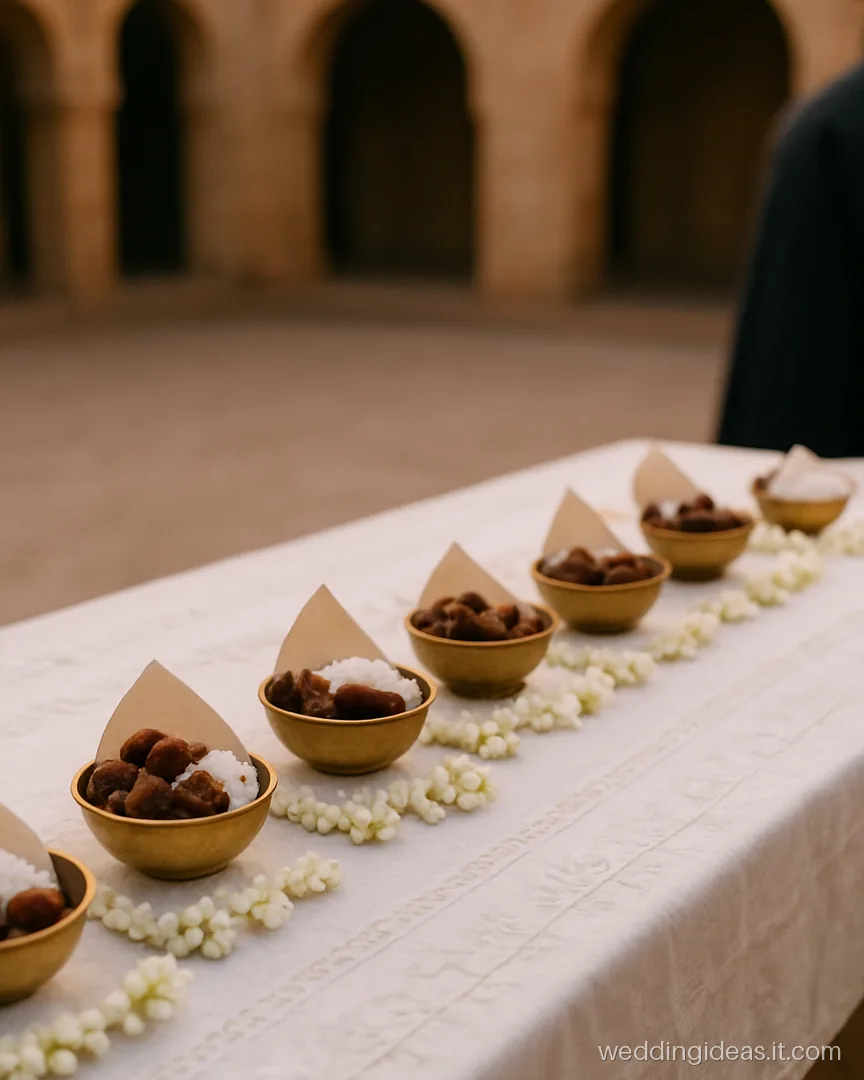 No. 03
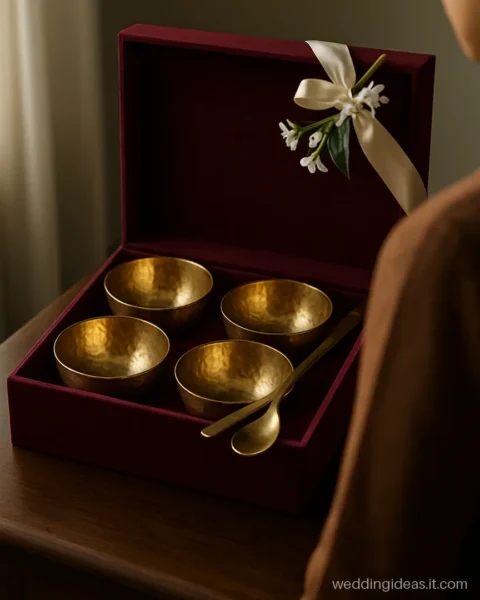
Dates and misri bowls
Brass, date brown, crystal white
- ForAfter nikah
- EffortEasy
After the bride and groom each say qubool, I accept, usually three times, the qazi reads prayers and the families share dried dates and sugar crystals with everyone present.
3 planner notes
- Pack dates in small paper cones so they are easy to pass around.
- Plan about a handful per guest at the nikah, not the whole hall.
- Keep a bowl aside for the bride's room; they are often missed.
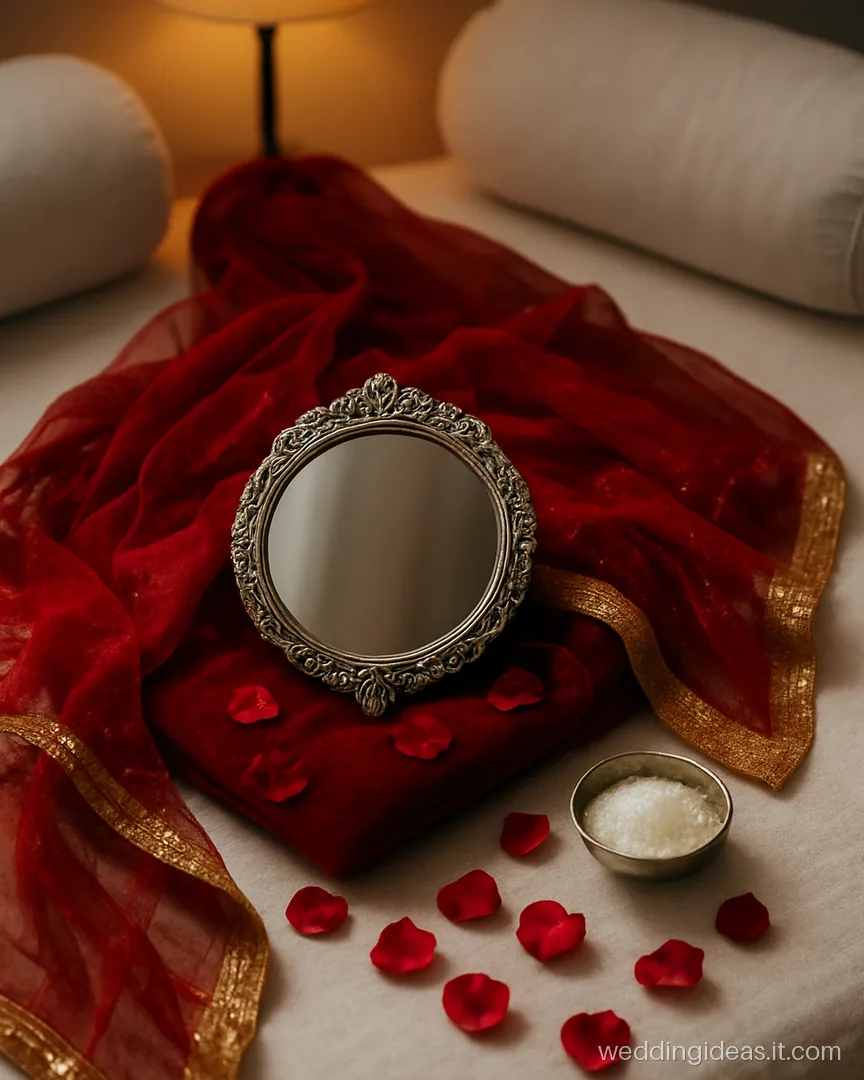 No. 04
Mirror first look
Red net, silver mirror, gold
- ForAfter nikah
- Effort15 minutes
In many North Indian families the couple sees each other for the first time as husband and wife in a mirror placed between them, under a dupatta held over their heads. It is a gentle, private custom.
4 planner notes
- Use a hand mirror with a firm handle, not a heavy wall mirror.
- Choose a light net dupatta so the couple is not too warm.
- Keep only close family around; it is meant to be quiet.
- Let the photographer shoot through the dupatta edge, not the mirror.
03Rukhsati and Walima
The bride leaves her parents' home after dinner, and the groom's family hosts the walima, the wedding feast, usually the next day or soon after.
 No. 05
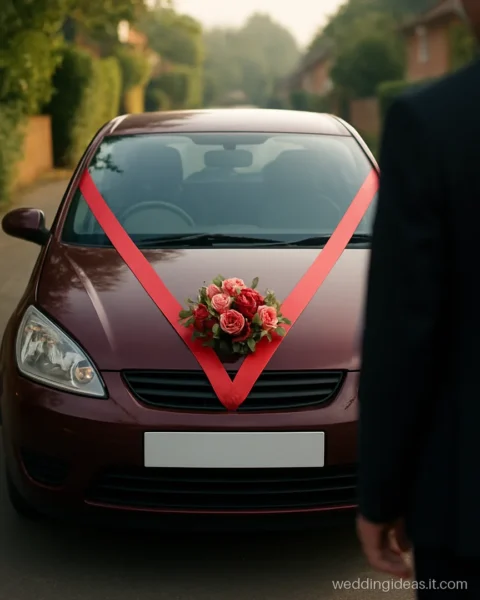
Rukhsati car flowers
White rose, red rose strings
- ForRukhsati
- Effort2 hours
Rukhsati is the bride's farewell from her family. Her father or brother walks her to the car, and some families hold a cloth or a tray over her head as she leaves.
4 planner notes
- Decorate the car after dinner starts so the flowers stay fresh.
- Keep a bottle of water and tissues in the back seat.
- Fix strings with ribbon on the handles, never tape on paint.
- Plan a short route; she has been in heavy clothes since noon.
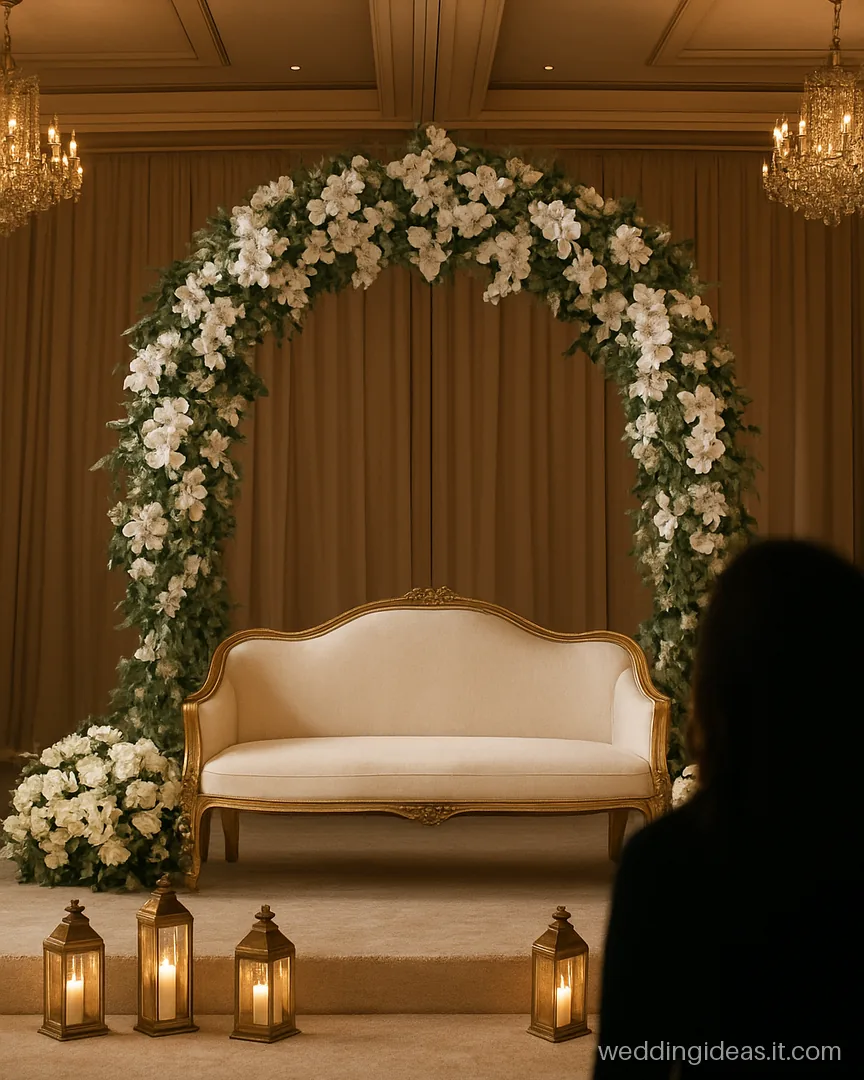 No. 06
Orchid arch walima
White orchid, sage, soft gold
- ForWalima
- Effort1 day setup
The walima is the groom's family's feast to announce the marriage to friends and neighbours. It is often lighter in mood than the wedding night, with the couple seated together to meet guests.
3 planner notes
- Book the walima hall with the wedding venue; dates fill together.
- Plan food for a larger list; the walima invites more neighbours.
- Keep a separate counter so the couple can eat early.
Muslim Wedding Rituals in Order
| No. | Name | Meaning | People involved | Time needed |
|---|---|---|---|---|
| 1 | Baraat | The groom and his relatives reach the venue, his face often veiled by a flower sehra | Groom's family and friends | 1 hour |
| 2 | Istaqbal (welcome) | Bride's family welcomes the groom with rose water, garlands and a sweet drink | Bride's family | 20 minutes |
| 3 | Mehr agreed | Groom's gift to the bride, settled earlier, is confirmed for the contract | Elders, qazi | 10 minutes |
| 4 | Ijab and qubool | Proposal and acceptance; each says qubool, I accept | Bride, groom, wali, witnesses, qazi | 20 minutes |
| 5 | Nikahnama signed | Written contract signed by couple, witnesses and qazi | Same as above | 15 minutes |
| 6 | Prayers and dates | The qazi's prayers; dates and sugar crystals shared | Everyone present | 10 minutes |
| 7 | First look | Couple sees each other in a mirror under a dupatta, in many families | Couple, close family | 15 minutes |
| 8 | Dinner and games | Shoe hiding by the bride's sisters, milk offered to the groom | Cousins, sisters | 1 to 2 hours |
| 9 | Rukhsati | The bride's farewell | Both families | 30 minutes |
| 10 | Welcome home | Groom's mother receives the bride | Groom's family | 20 minutes |
| 11 | Walima | Feast hosted by the groom's family | All guests | An evening |
| 12 | Chauthi | On the fourth day or so, the new bride goes back to see her parents | Newly married pair, her parents | A day |
Some families hold the nikah in the morning and the dinner at night; others do everything in one evening.
What the Families Must Arrange
- Papers: ID proof and photos of the couple and witnesses, the agreed mehr in writing, and the nikahnama the qazi brings. Many families also register the marriage afterwards; ask the qazi about the process in your state.
- Nikah space: a quiet room or corner with a low table, cushions, good light, pens and a folder.
- Welcome: rose water sprinkler, garlands, a sweet sherbet or milk drink, the sehra if the family uses one.
- Sharing: dried dates and sugar crystals in bowls or cones.
- Bride's side: outfit for the nikah (sharara, gharara, lehenga or saree), a light dupatta for the first look, the mirror.
- Farewell: decorated car, a bag with water and comfortable shoes for the bride.
- Walima: hall, food, a simple stage, return sweets for guests.
Etiquette for Guests and Hosts
- Guests at the nikah should dress modestly; women often keep a dupatta handy and men may cover their heads during the prayers.
- Do not play music during the nikah itself; save it for the dinner.
- Mehr is the bride's right. Families should never haggle over it on the day.
- Gifts are usually given at the walima or to a family member. Cash in an envelope with the family name works well; see what to write on a wedding gift envelope.
- Customs differ by community and region. Where your qazi or elders guide you differently, follow them.
Questions families ask
What are the main Muslim wedding rituals?
The baraat and welcome, the nikah with mehr, ijab and qubool and the signing of the nikahnama, then the rukhsati and the walima. Many families add regional customs before and after.
What is mehr in a nikah?
Mehr is a gift the groom gives or promises to the bride as part of the contract. It is agreed by both sides before the nikah, written in the nikahnama and belongs only to the bride.
How many witnesses are needed for a nikah?
Traditionally two adult witnesses are present, and in India families commonly bring witnesses from both sides. Ask your qazi what his practice is.
Who hosts the walima?
The groom's family hosts the walima, usually the day after the nikah or within a few days. It is a feast to share the news of the marriage.
How long does the nikah ceremony take?
The nikah itself usually takes 30 to 45 minutes, including consent, signing and prayers. The full wedding evening with dinner and farewell takes several hours.
Plan these next


More in wedding rituals
 South Indian wedding6 ideas with notes
 Punjabi wedding rituals6 ideas with notes
 Marwari wedding6 ideas with notes
 Bihari and UP wedding rituals6 ideas with notes
 Gujarati wedding rituals6 ideas with notes
 Jain wedding6 ideas with notes
 Maharashtrian wedding rituals6 ideas with notes
 Sindhi wedding rituals6 ideas with notes